
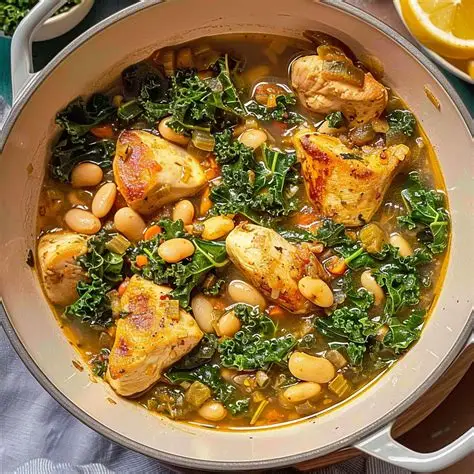
Chicken, white bean and kale stew
- 545
- Calories
- 56 g
- Protein
- 53 g
- Carbs
- 13 g
- Fat
- 15 g
- Fiber
One serving is about 3 cups of stew.
Estimated per serving (each recipe makes 2). Calculated from standard USDA ingredient values and rounded, so brands and portions will vary. Milk is assumed to be unsweetened almond milk and yogurt 2% plain Greek. This is general information, not medical or dietary advice.
No major allergens in the listed ingredients. Check labels on packaged items like broth, tortillas and canned goods.
Ingredients
- 12 oz boneless skinless chicken breast
- 1 can white beans (15 oz can)
- 3 cups chicken broth, low sodium
- 4 cups kale
- 1 yellow onion
- 2 carrot
- 3 cloves garlic
- 1 tsp dried thyme
- 1 tbsp olive oil
- ½ tsp salt
- ¼ tsp black pepper
Steps
- 1Drain and rinse the white beans. If the chicken breast is large, cut it into 2 pieces so it cooks evenly.
- 2Heat the oil in a large pot over medium heat. Cook the diced onion and carrots 5 to 6 minutes.
- 3Add the minced garlic and thyme. Stir for 30 seconds.
- 4Add the broth and chicken. Bring to a gentle simmer, cover, and cook 12 to 18 minutes, turning once if needed. Check the thickest part with a thermometer: it must reach 165°F.
- 5Move the chicken to a clean plate and shred it with two forks. Don't reuse the plate or utensils that touched raw chicken without washing them.
- 6Add the beans and chopped kale (tough stems removed) to the pot. Simmer uncovered 4 to 5 minutes, until the kale is tender.
- 7Return the chicken to the pot, stir in the salt and pepper, and heat through.
Food safety
Use a food thermometer: cook fish to 145°F, and chicken and turkey (including ground turkey) to 165°F. Cook eggs until firm. Refrigerate cooked food within 2 hours and eat it within 3 to 4 days; reheat it to 165°F. Wash produce, and rinse canned beans unless the recipe says otherwise. Times are estimates, so use the temperature and the visual cues. Check the labels for allergens in the products you buy.